Badenoch wants to remove England’s £100,000 childcare cutoff
5 October 2026


Her conference interviews put coalition choices in the spotlight, but a hung parliament does not automatically mean another vote.
By Steve Carsley 7 October 2026
Imagine going through an election campaign, waiting for the results, and then being told the country might need to do it all again. That is the possibility Kemi Badenoch raised as she explained where she stands on working with Reform UK.
In interviews on October 6, the Conservative leader said she would prefer another general election to a deal with Nigel Farage’s party if the vote left no clear winner. Speaking at her party’s conference in Birmingham, she was trying to draw a firm line between the Conservatives and their rival on the right.
In the BBC interview carried by AOL, Badenoch urged Reform supporters to return to the Conservatives. Her argument was that voters who wanted a Conservative government needed to vote for one, rather than expect the two parties to join forces afterwards.
Badenoch also acknowledged that an election held now would produce a hung parliament, according to Politics.co.uk’s report of her Sky News interview. That is her assessment of the political picture, not an election result or a guarantee about the next vote.
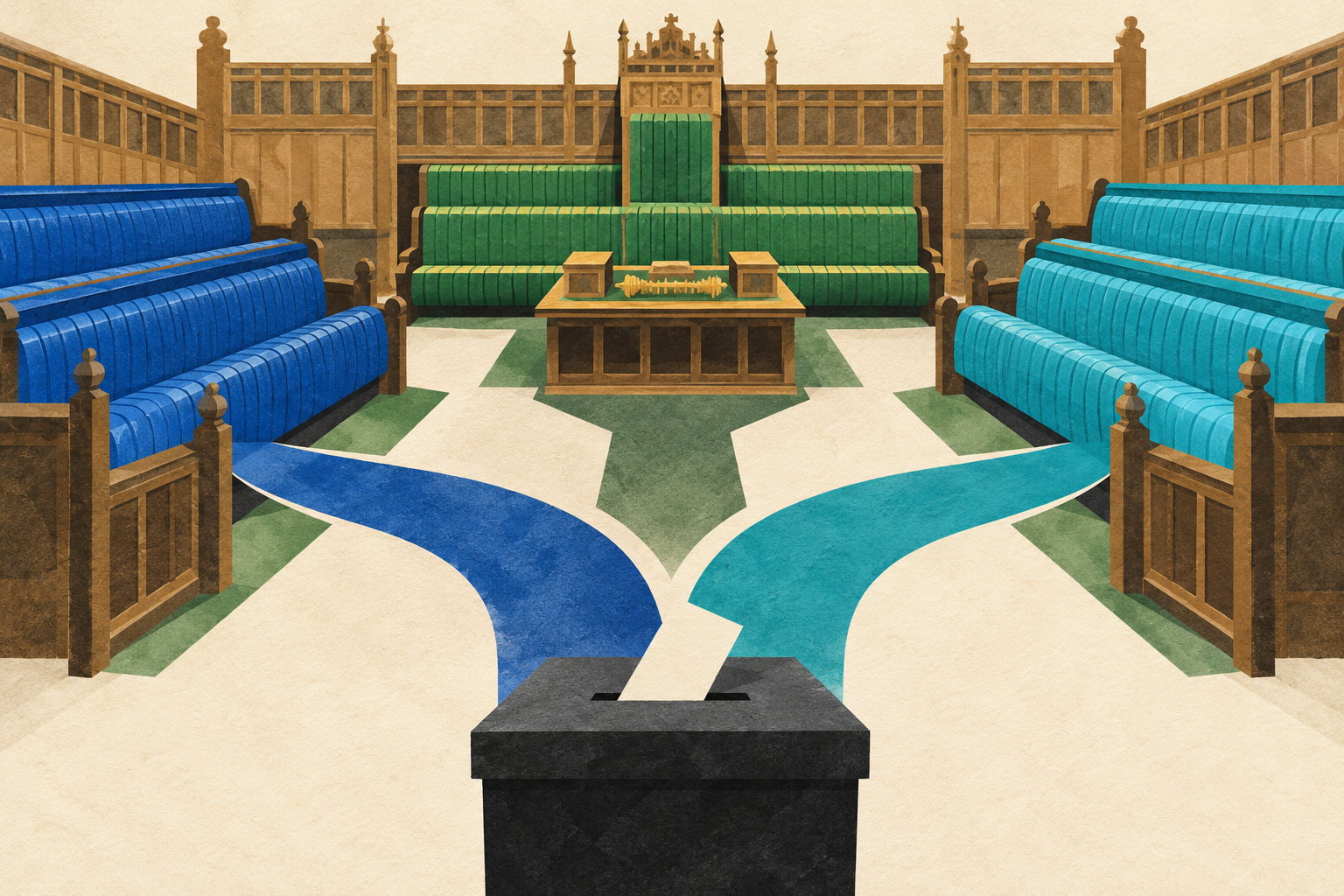
The phrase “hung parliament” can sound like the whole system has crashed. In practice, it means no single party has won a majority of seats in the House of Commons. The country still needs a government, and there are several ways to form one.
Parliament’s own explanation sets out the options. Parties can negotiate a coalition, sharing government. Alternatively, a party can govern without a majority of its own if it can secure enough support from other MPs on essential votes.
The key question is whether a government can command the confidence of the Commons. Simply having the biggest pile of seats does not remove the need to find that support. Equally, failing to win outright does not automatically send everybody back to the polling booth.
Badenoch’s position therefore tells voters about her preferred choice in a possible future situation. It does not announce a new election, set its date or decide what other parties would do after the results.
For voters, including people choosing a party for the first time, this is a useful question to ask every leader: what happens if your party cannot govern alone? Manifestos explain what parties want. Their answers about cooperation help explain how they might actually get anything done.
The arithmetic comes after the votes. For now, Badenoch is making clear which partnership she wants voters to rule out.
Similar stories