
Cuba starts restoring power after another nationwide blackout
20 September 2026


Tianwen-3 is targeting a 2028 launch and samples back on Earth in 2031.
By Steve Carsley 10 September 2026
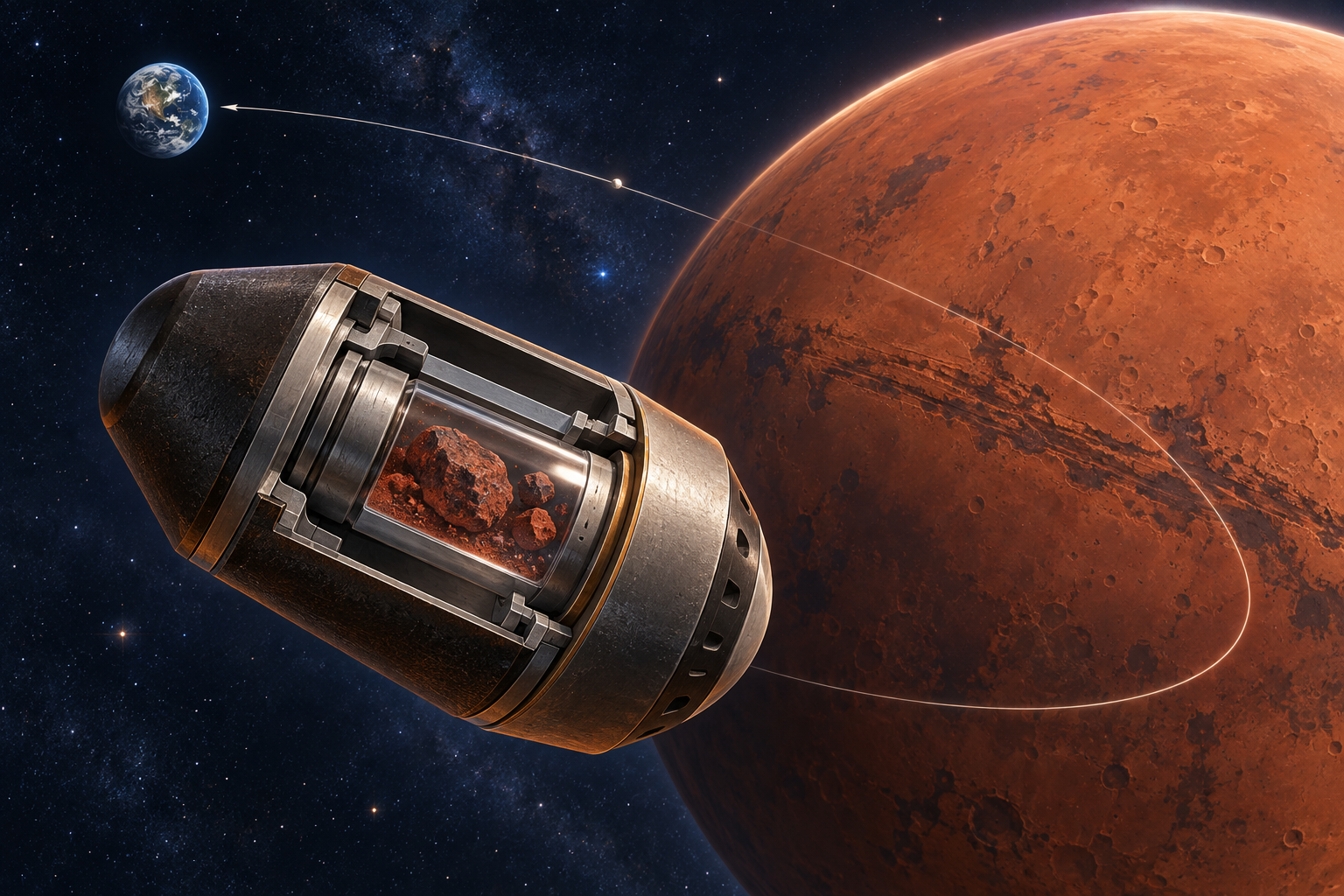
A few handfuls of dust could become some of the most closely examined material on Earth. China is developing a mission to collect samples on Mars and bring them back, giving scientists a chance to study the red planet in laboratories here.
Space.com's September 9 report described progress on Tianwen-3, which aims to launch in 2028 and return roughly 500 grams of Martian material in 2031. Those remain targets for a future mission, not completed milestones.
The mission's chief scientist, Hou Zengqian, has said work is advancing while teams tackle technical challenges. The latest attention follows updates around a deep-space exploration conference in Hefei earlier in September. The story is about progress on a plan, rather than a rocket that has already left Earth.
The Chinese Academy of Sciences' account identifies the search for evidence of past life as a leading scientific goal. It describes five mission components: a lander, an ascender, a service capsule, an orbiter and a module for returning through Earth's atmosphere.
Each part has a job. Reaching Mars is only the start. Material must be collected, lifted off the surface, passed to a spacecraft in orbit and sent home. That is a much longer to-do list than landing a camera and sending back pictures.
The Planetary Society's mission explainer describes an ascent vehicle meeting the orbiter after leaving Mars. The orbiter would carry the samples toward Earth, with a return capsule protecting them during the final arrival. If successful, Tianwen-3 would achieve the first robotic delivery of samples collected on Mars to Earth.
The value is the chance to examine physical material with laboratory equipment, rather than relying only on measurements that fit aboard a spacecraft. Researchers could test different explanations and revisit the samples as techniques improve.
But keeping those samples scientifically useful requires care. China in Space's September 8 coverage described plans to prevent contamination and isolate returned material. An Earth microbe hitching a ride would be a terrible plot twist in a search for Martian life.
Even a successful return would not guarantee evidence of life. A rock can reveal something valuable about a planet's history without containing a biological discovery. Scientists would still have to separate possible signs of life from other explanations.
For now, the exciting part is the ambition and the engineering needed to deliver it. The headline moment may be a launch, but the real finish line is a sealed sample reaching Earth safely, with its scientific story still intact.
Similar stories
20 September 2026

19 September 2026

18 September 2026