
Cuba starts restoring power after another nationwide blackout
20 September 2026


Research into microscopic currents offers another way to understand the pressure warming oceans put on reefs.
By Steve Carsley 21 September 2026
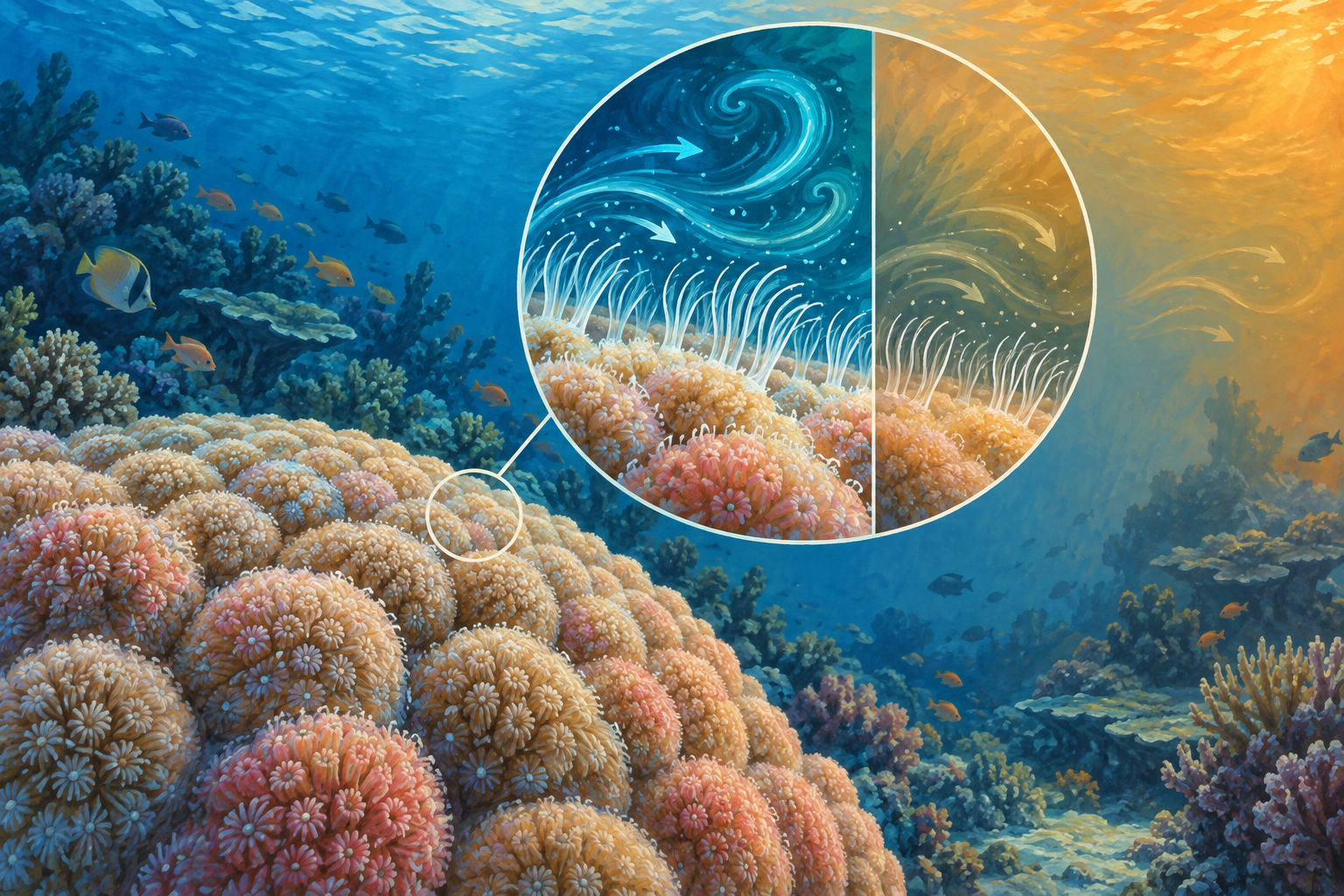
A coral reef may look still, but its surface is busy. Microscopic, hair-like structures beat through the water, helping these animals get the oxygen they need to stay alive.
Those structures are called cilia. Research brought back into focus by WIRED's September 20 science feature explores how this small-scale activity can struggle as water warms. The underlying study was published in May, so this is renewed attention to a finding, rather than a discovery made overnight.
The study, published in Science Advances, examined the reef-building coral Porites lutea under rapid warming in darkness. Researchers combined high-speed imaging, particles that reveal oxygen conditions and a model of how water and oxygen move.
As temperature increased, the cilia initially became more active. But greater movement did not always mean enough oxygen reached the tissue. Oxygen-poor water accumulated near the surface, while the coral's demand for oxygen rose.
At higher temperatures, the system could no longer meet that demand. Eventually, coordinated ciliary movement broke down and the small water currents weakened. The experiments linked this failure to worsening oxygen stress and coral mortality.
The result is a useful reminder that “working harder” and “working well” are different things. Faster movement alone cannot guarantee that an animal receives what it needs when its surroundings are changing.
A University of Copenhagen explanation reports that ciliary motion began collapsing around 37 degrees Celsius in the experiments. The researchers stress that this is not a safe limit for all coral reefs. Species, local conditions and adaptation can change how soon problems appear.
The university also explains why the process matters at night: without daytime photosynthesis from their partner algae, corals rely on oxygen from the surrounding water. The experiment's dark conditions helped scientists isolate that challenge.
Coral bleaching is familiar because its pale appearance is easy to see. Oxygen stress happens on a much smaller scale. Studying it could help researchers understand damage that is not obvious from a reef's colour alone.
In Quanta Magazine's original reporting, independent researcher Rachel Alderdice cautioned that the relationship between cilia and bleaching still needs clarification. The research team also wants to test more conditions, including normal cycles of light and darkness.
That leaves an important boundary around the finding. A laboratory experiment can identify a mechanism without explaining every stressed reef. More species and more realistic environmental conditions need to be examined before the results become a broad monitoring tool.
For now, the research adds something valuable: reefs are not simply waiting for water to pass over them. They help manage their immediate surroundings, and warming can put that ability under pressure.
Similar stories
20 September 2026

19 September 2026

18 September 2026