
Food, school, healthcare: UNICEF warns Lebanon’s children are losing the basics
3 October 2026


Hundreds of schools closed amid unrest, while concerns over staffing and learning conditions remained unresolved.
By Steve Carsley 3 October 2026
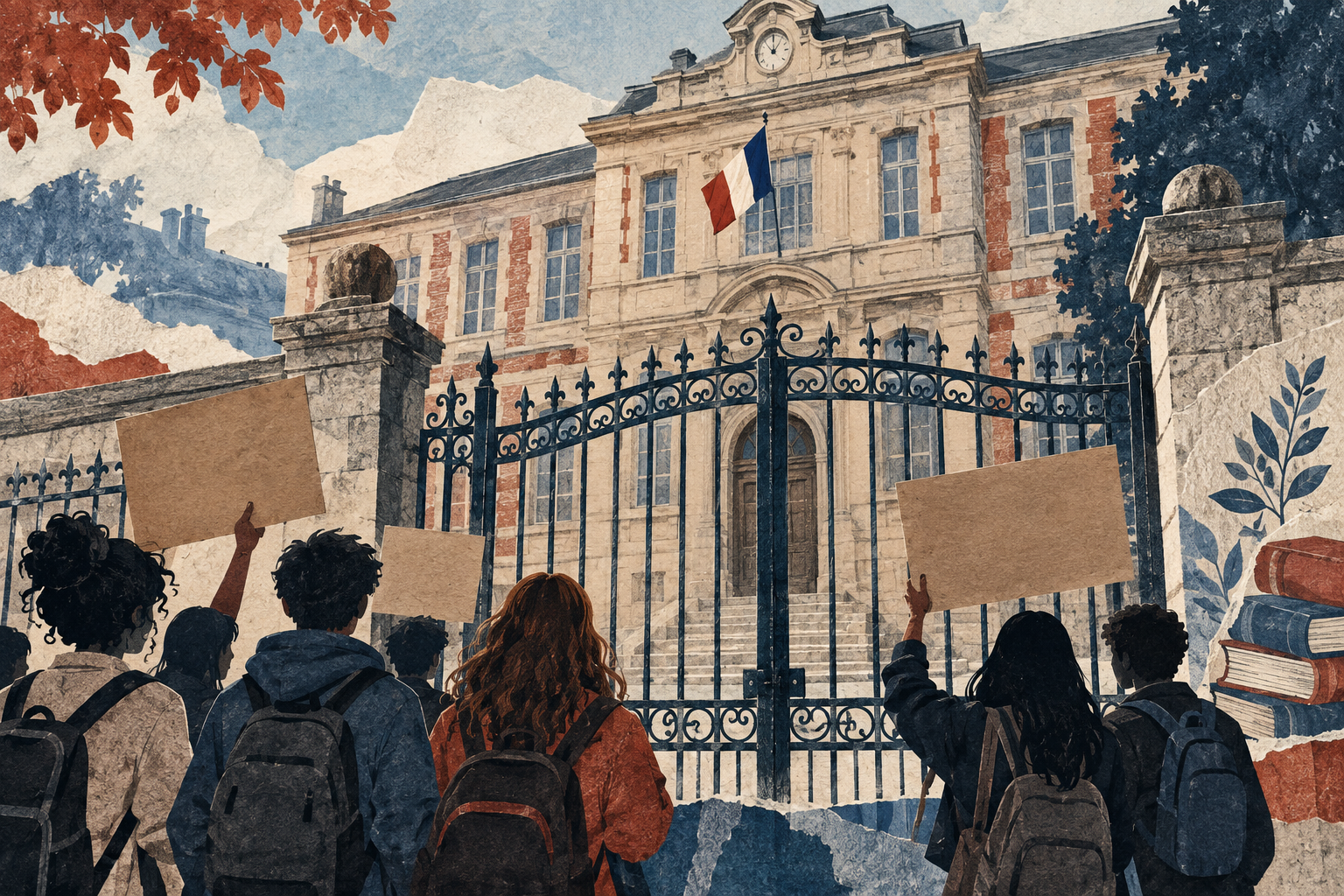
A school day normally begins with getting through the gate and finding your classroom. Across parts of France on October 2, the gates themselves had become the centre of a growing confrontation.
Hundreds of schools closed as student protests continued, with clashes and fires in some places. The movement began with complaints about learning conditions and spread into a national crisis for the government.
Reuters reported that students were angry about overcrowded classrooms, shortages of teachers and deteriorating school buildings. Demonstrations that began in the Paris region had spread across the country.
These are concerns about what happens inside school, even though much of the attention is now on the streets outside. A timetable means little if the teacher is missing; a classroom place means less if the room cannot properly accommodate its students.
Reuters described confrontations involving tear gas, fireworks and burning rubbish. It also spoke with students who were staying away from demonstrations because the violence had escalated.
About 400 schools were closed on Friday. In a separate measure, AP reported that the education ministry counted 560 schools affected by protests by early afternoon. Schools experiencing disruption and schools fully closed are not the same count.
Le Monde’s reporting described a government trying to restore order while facing pressure to address the students’ original demands.
Officials accused the left-wing La France Insoumise party and outside groups of exploiting the movement. Its leader Jean-Luc Mélenchon rejected responsibility for the violence. Those accusations remain claims by the sides involved, rather than an explanation that applies to every participant.
DW reported that Education Minister Edouard Geffray met student representatives and unions on Friday. Student leaders wanted concrete responses, supported continuing the movement and also called for non-violent action.
That combination matters. Supporting demands for better education does not automatically mean supporting damage to schools or attacks on people. Equally, reporting the violence should not erase the questions about staffing and resources that brought students out.
The next test is whether dialogue produces changes students can recognise in daily school life. Announcements alone will not show whether a class has reliable teaching, enough space or a building that works.
For families watching the unrest, two immediate needs sit together: keeping young people and staff safe, and making sure the argument about education receives an answer beyond the police response.
Similar stories
3 October 2026

30 September 2026

29 September 2026