Puripol Boonson runs 9.90 and ends Thailand's 48-year wait for Asian Games 100m gold
26 September 2026


A six-point half-time lead nearly disappeared, but India kept its nerve in a tense final.
By Steve Carsley 27 September 2026
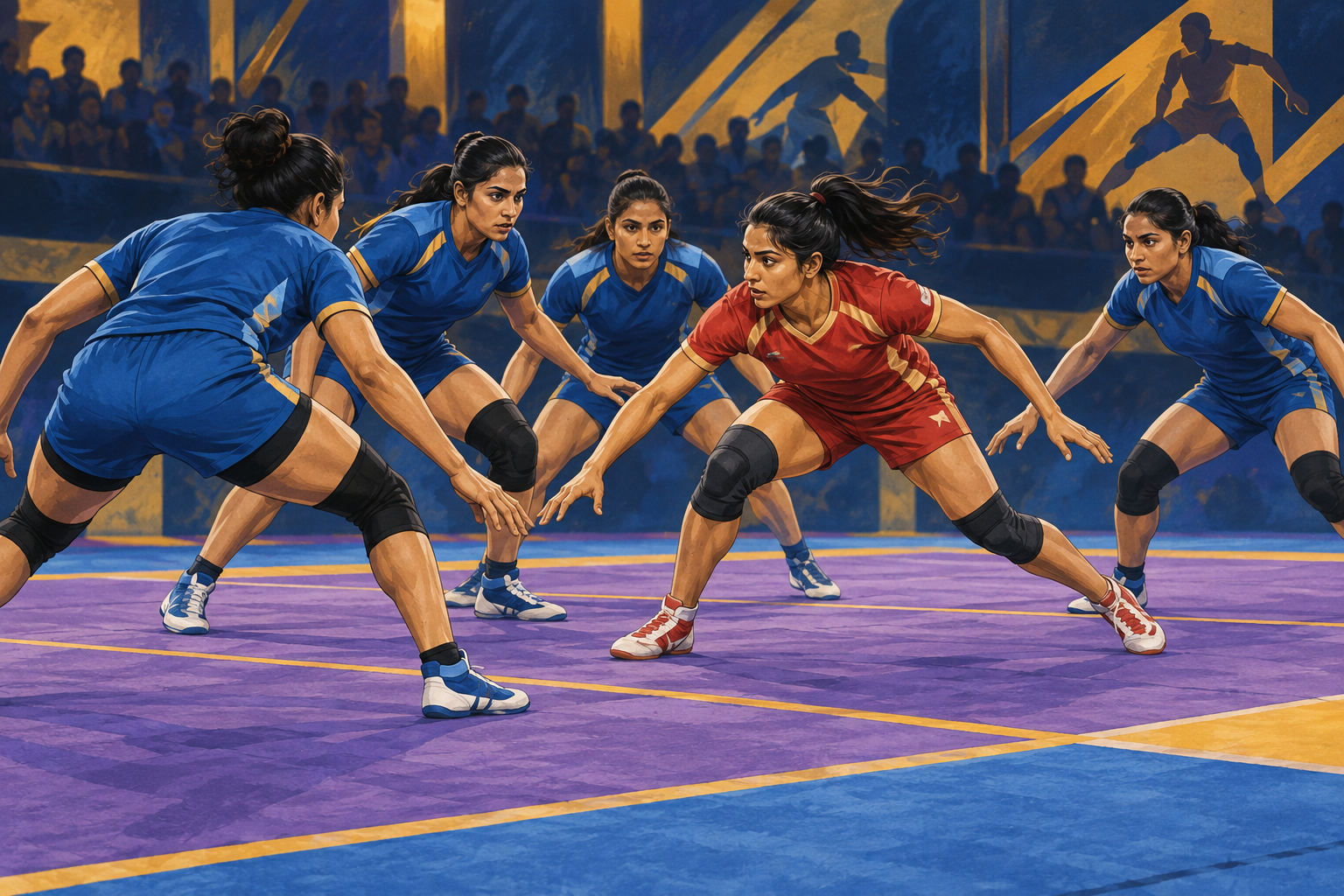
For a while, India looked comfortably ahead. Then Iran turned a six-point gap into a one-point warning. Suddenly, the gold-medal match had the kind of tension that makes even the person watching from a sofa sit up straight.
India's women's kabaddi team beat Iran 37–34 on September 26 to retain its Asian Games title. The victory brought a fourth gold in the women's event, but the final score tells you this was no easy stroll to the podium.
Pro Kabaddi's match report recorded a 22–16 Indian lead at half-time at the Tokai Citizen Gymnasium. Iran then won the second-half scoring battle 18–15. India's earlier advantage was enough to survive, though the finish was much tighter than the interval score suggested.
That split captures the shape of the contest. India had built room to breathe, Iran took much of it away, and the defending champions still found enough points to finish ahead.
According to PTI's report carried by NDTV, a four-point raid by Iran's Atena Madadi reduced the gap to 27–26. At that stage, one strong passage could have changed the direction of the match.
India responded. PTI credited Sanju with a two-point raid and Pushpa with a tackle during the recovery, reporting that India moved to 34–28 with four minutes remaining. Iran continued to push, but the final margin stayed in India's favour.
The result also added another chapter to a rivalry with real history. As The Indian Express reported, India has now won four of the five Asian Games women's kabaddi titles. Iran took the other one in 2018, when India finished with silver.
India's earlier golds came in 2010, 2014 and 2023. The latest win therefore means back-to-back titles, and it came against a team that already knows what beating India on this stage feels like.
The Indian Express also reported an unbeaten campaign, including group-stage victories over Bangladesh, Japan and Iran. Still, having beaten an opponent earlier does not make the final automatic. This match offered a fairly loud reminder of that.
There are two ways to read 37–34. One is as another Indian gold in a sport where the country has a strong record. The other is as evidence of how hard Iran made the champions work.
Both deserve space. Calling it comfortable would erase the comeback. Treating it as luck would ignore the lead India built and the response after that lead shrank.
For young fans discovering the sport, this final offered a useful introduction: momentum can move quickly, and a cushion can disappear before anyone is ready. India won because, when the pressure arrived, it still had an answer.
Similar stories