
Cuba starts restoring power after another nationwide blackout
20 September 2026


A staged protest used machines to push a real debate about automation and work.
By Steve Carsley 11 September 2026
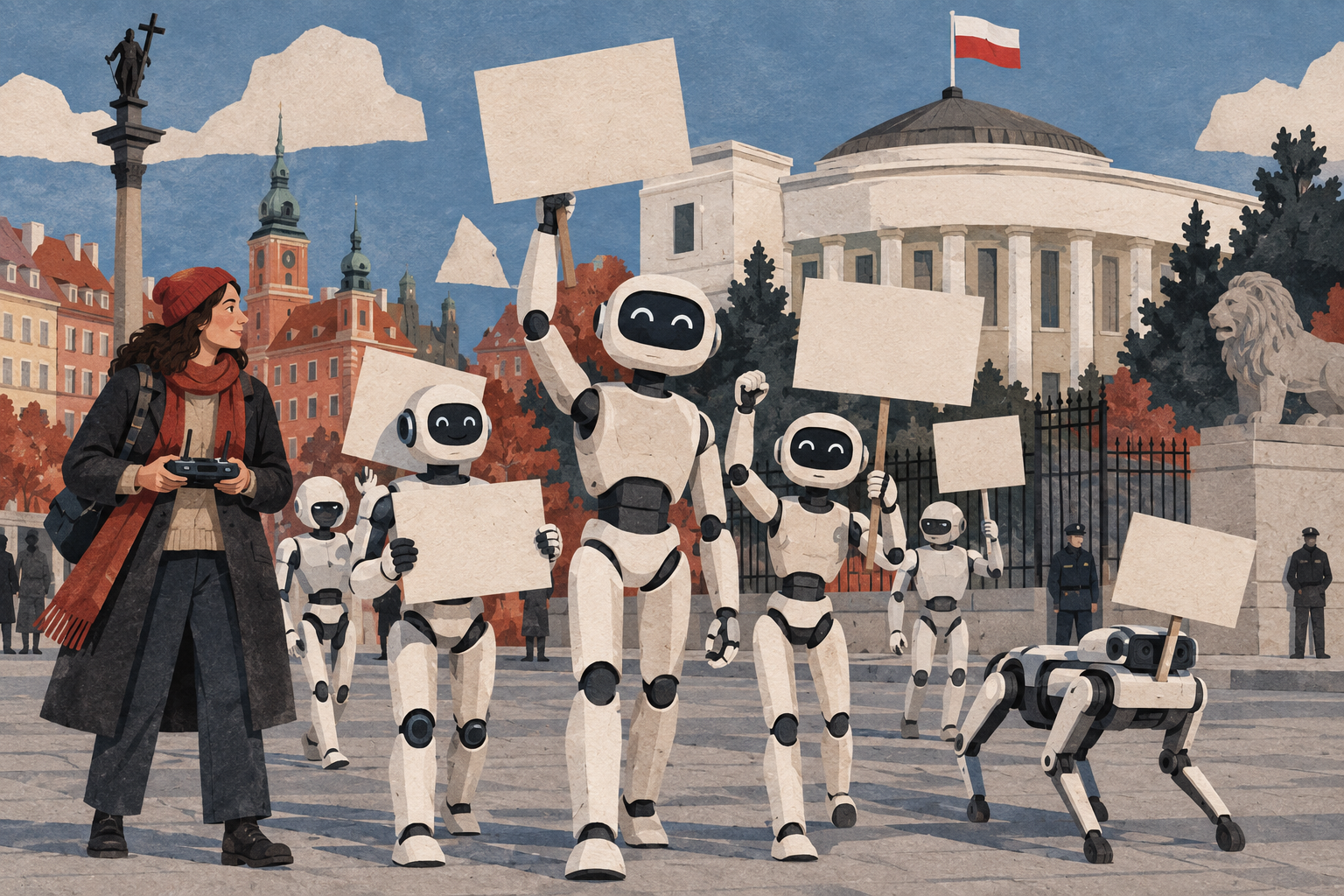
The protesters had metal bodies, some walked on four legs, and their message was about protecting human workers. Around 30 robots appeared outside Poland's digital affairs ministry in Warsaw on September 7 in a demonstration organised by people.
The event drew renewed attention in TechSpot's September 10 coverage. The machines carried signs and moved around while slogans played through speakers. It was an attention-grabbing way to raise a serious concern: how should society handle jobs changed by AI and automation?
The organising initiative, Democratism, says it wants public discussion about the effect of AI and robotics on work. Its own website argues for clear rules that combine technological development with responsibility, job security and preparation for changes in the labour market.
That makes the demonstration a campaign designed by humans. It is not evidence that the machines independently developed political opinions, became worried about unemployment or decided to organise a march. The image is funny precisely because people chose an unexpected messenger.
There is also a commercial connection worth understanding. Notes from Poland reported that the initiative was launched by Delta Robots, a company that rents robots for events. An organiser acknowledged that the campaign also had publicity value for the business.
The same report said digital affairs minister Krzysztof Gawkowski met the demonstrators and told them his department was working on regulation. An organiser argued that proposals under discussion did not offer enough practical protection for workers. A meeting outside a ministry, however, is not the same as a new law being passed.
The wider question is not answered by counting the robots in a video. A machine that performs well at a demonstration does not prove that a whole occupation can be automated, or tell us how many jobs will disappear.
Work is made up of many tasks. Changing one task can alter a job without removing it entirely. In other situations, an employer may need fewer people or different skills. The outcomes depend on what the technology can actually do and how organisations choose to use it.
For someone starting a career, the practical questions are more useful than either panic or hype. Who pays for retraining? How are workers involved when new systems arrive? And who is responsible when an automated process makes a mistake?
The campaign is asking people to discuss those choices before change leaves them scrambling. Its robotic cast helped the message travel, but the decisions still belong to employers, workers and governments.
So yes, robots appeared at a protest about robots. The unusual sight made a good clip. The human debate underneath it is likely to outlast the batteries.
Similar stories
20 September 2026

19 September 2026

18 September 2026