
Cuba starts restoring power after another nationwide blackout
20 September 2026


A small trial tests whether local sheep wool can replace synthetic covers used to slow melting in selected areas.
By Steve Carsley 8 September 2026
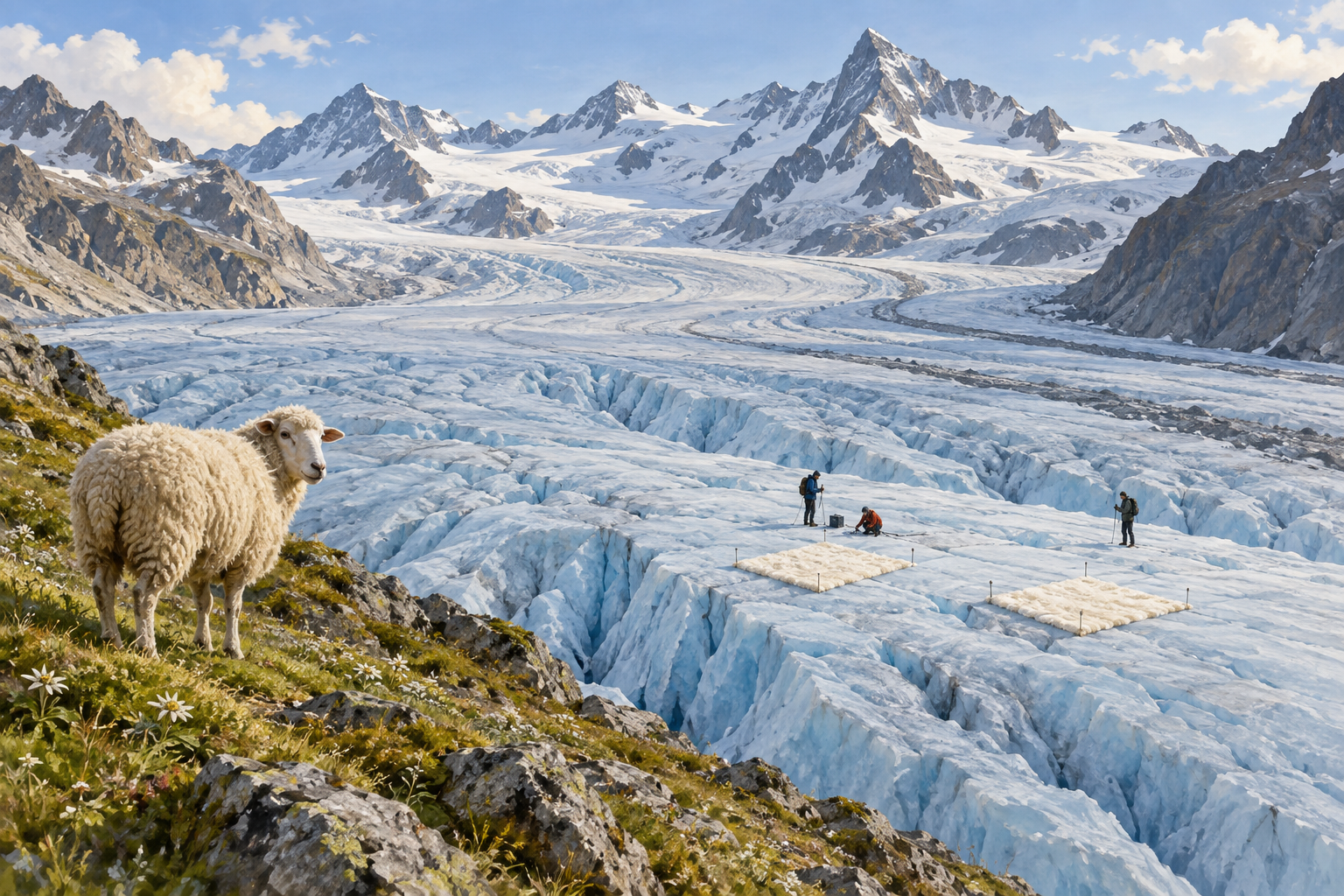
A blanket usually sounds like the last thing you would offer something that needs to stay cold. On a Swiss glacier, researchers are testing why that first impression can be misleading.
The Keep It Wool project is comparing sheep-wool covers with a conventional synthetic cover at Glacier 3000 in Les Diablerets. Summit Foundation says the work, carried out with the University of Lausanne, is testing a locally available material for a job already performed by specialist glacier textiles. The project's official explanation.
The experiment began in June. Two wool prototypes, each measuring ten metres by ten metres and made in different thicknesses, were placed beside a synthetic cover of the same size. Measurements were taken through the summer to track what happened beneath them.
The foundation says early observations suggest protection comparable to the conventional material, but the collected data still needs analysis. That qualification matters. A promising first summer is a reason to examine the results carefully, rather than declare the research finished.
Swiss news agency Keystone-SDA also reported on the trial, noting scientific support from glacier-monitoring specialists. Its account explained that the appeal of wool includes using a renewable, biodegradable material instead of synthetic fibres. Keystone-SDA's report.
The question is narrower than whether a blanket can rescue the Alps. It is whether a different material can perform a useful local task with fewer drawbacks. That is a much more realistic research project, even if it fits less neatly into a dramatic social-media caption.
Reuters' reporting from the site described the comparison with synthetic geotextiles already used to reduce summer melting in selected areas. Researchers were looking at how wool performs under mountain conditions, rather than simply assuming that something natural must work better. Reuters' report from the experiment.
Covering a patch and slowing its melting is different from stopping a whole glacier's retreat. The size of the protected area matters, as do the effort and materials needed to maintain it.
Summit Foundation explicitly says this approach cannot halt glacier loss caused by climate change. Cutting greenhouse-gas emissions remains central to limiting the long-term retreat. The covers are a local measure, with a local purpose.
The unusual experiment received renewed attention in Monday's Reuters World News episode. Its appeal is easy to see: familiar material, unfamiliar setting, and a question people can picture immediately. The episode listing and transcript.
The next useful step is the analysis. Until then, wool on ice is a promising material test with clear limits. The sheep have joined the conversation. They have not solved climate change.
Similar stories
20 September 2026

19 September 2026
18 September 2026