
Cuba starts restoring power after another nationwide blackout
20 September 2026


A new UN weather agency report warns that rivers and stored freshwater are becoming less dependable.
By Steve Carsley 18 September 2026
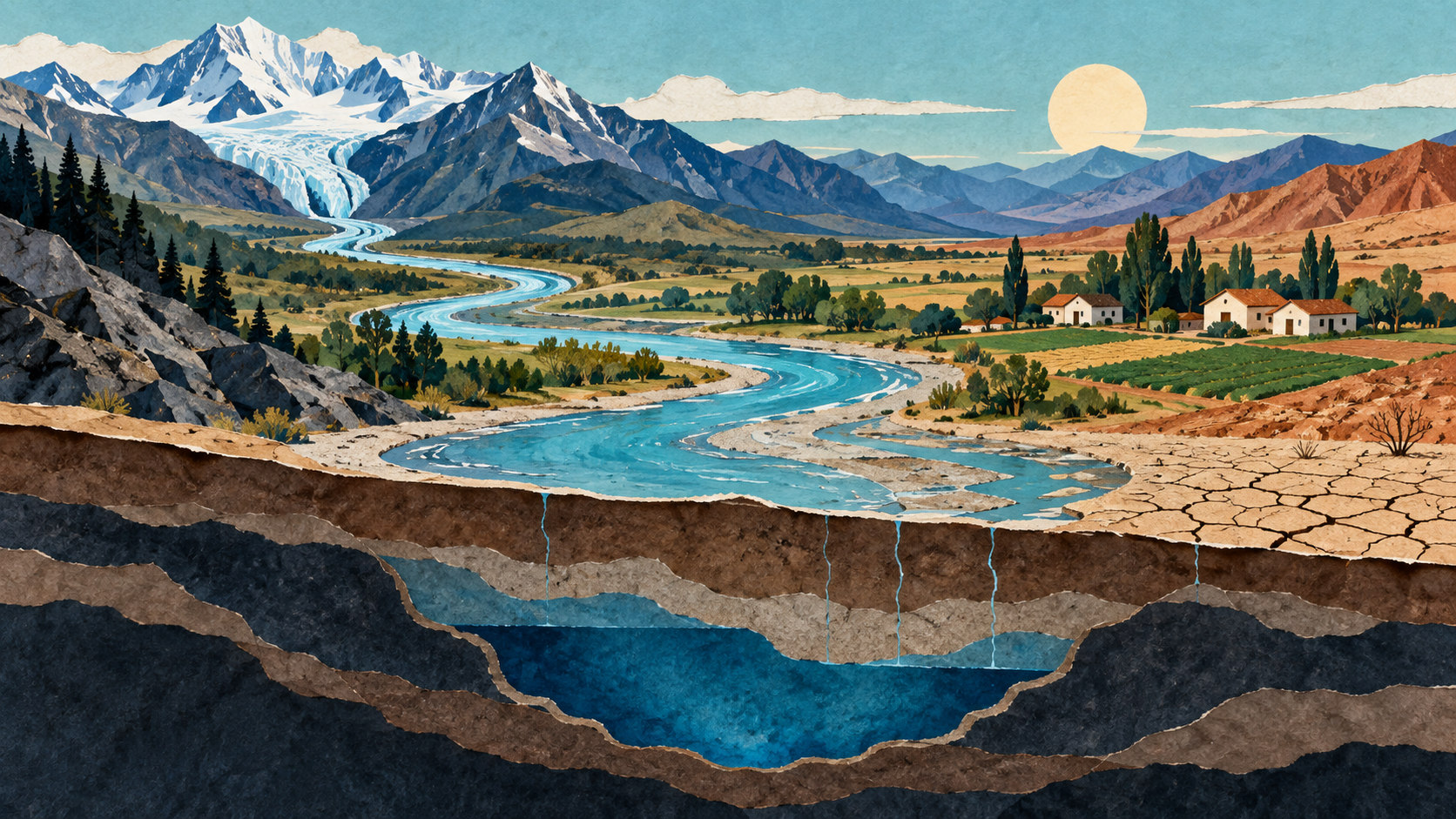
A flood on your feed and a drought warning in the news can look like opposite stories. A new global water report explains why both can be signs of a system becoming harder to rely on.
The World Meteorological Organization released its latest State of Global Water Resources findings on September 17. Looking back at 2025, it found another year of highly uneven water conditions and continuing pressure on the reserves people depend on.
The WMO’s assessment places 2025 among the driest years for global river flows in a 35-year record. About 36 per cent of the world’s river-basin area experienced flows below normal.
That figure describes an area of river basins. It does not mean that 36 per cent of all rivers disappeared, or that every country faced the same conditions.
The report also points to a longer decline in water stored on land since around 2014–2016. This includes more than reservoirs: groundwater, lakes, rivers, soil moisture, snow and ice all help make up the total.
A useful way to understand the difference is to think about income and savings. Rain is part of what comes in. Stored water is part of what helps you get through a difficult period. A wet spell does not automatically mean those savings have recovered.
Reuters’ coverage describes dry conditions across large areas alongside excess water in parts of South Asia. The same report records a fourth consecutive year of widespread glacier loss.
The issue is where water arrives, when it arrives and how much remains available afterward. Too much in one place can cause destruction while too little elsewhere creates a shortage. A global average cannot show every local experience.
Glaciers and other natural stores also help supply water beyond the moment rain falls. Losing those reserves can make future dry periods harder to manage. That is why this report looks beyond a single season’s weather.
Le Monde’s reporting highlights warming and groundwater extraction as pressures on freshwater supplies, alongside the need to protect soils and improve early warning systems.
The WMO calls for stronger monitoring and better sharing of water information. Its assessment combines observations, satellite information and modelling; gaps in measurements remain, including in parts of Africa and Asia.
For young people, this is a story about the reliability of the places where they will live and work. The useful question is not whether one rainy week proves everything is fine. It is whether communities can count on enough water through the next dry season, and whether they have a clear warning when they cannot.
Similar stories
20 September 2026
19 September 2026

17 September 2026