The G7 plans a 100-million-barrel fuel release. Will it ease the squeeze?
5 October 2026


Pumping restored access to an evacuation centre as officials prepared cleanup work and monitored fresh rain.
By Steve Carsley 5 October 2026
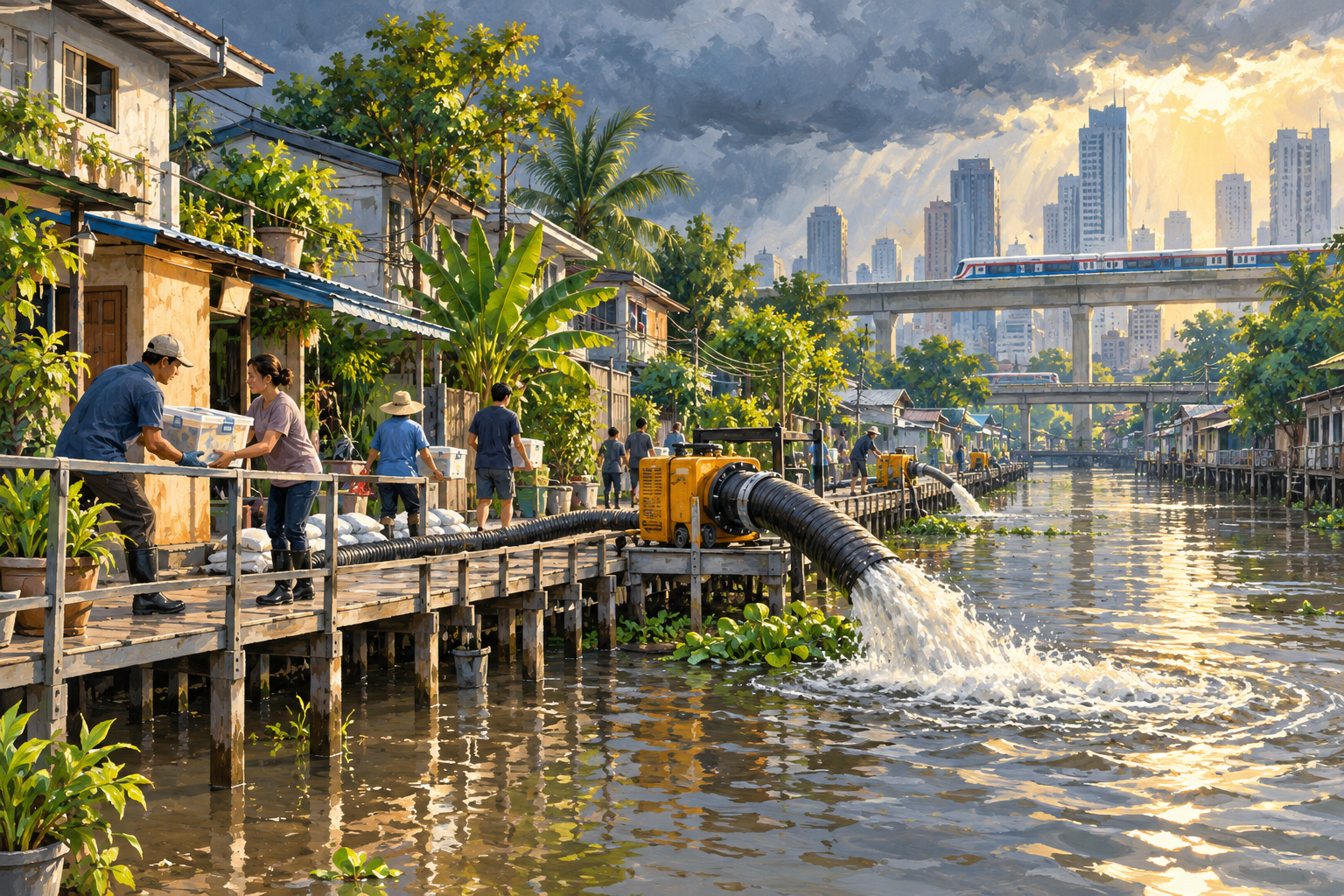
When floodwater drops, the first victory can be something ordinary: a vehicle reaching a building again. Bangkok officials reported that kind of progress on October 4, as pumping helped lower water in the Rom Klao and Lat Krabang areas.
Governor Chadchart Sittipunt said levels there had fallen by 50 centimetres and vehicles could once again enter and leave an evacuation centre, according to The Nation's report. That was a local improvement, not a declaration that the whole city had returned to normal.
Drainage through Prawet Burirom Canal remained a concern for nearby districts. Officials said more pumping equipment would be sent to housing estates where water was struggling to clear.
At Rom Klao Housing Estate, recovery work was divided into four zones so agencies could share responsibility. Elsewhere, at Khlong Chan, the next task included clearing large amounts of rubbish left after the water receded.
The practical point is easy to miss in a citywide headline. One road becoming passable does not mean the next neighbourhood has the same conditions. Getting water out and getting everyday life back are connected jobs, but they are not identical.
Thairath reported fresh rainfall across Bangkok on October 4, citing the Meteorological Department and the city's flood prevention centre. The report described rain spreading across several districts during the afternoon, with 40.5 millimetres recorded in Suan Luang at the time of the update.
That was a snapshot of conditions, rather than a forecast of how every district would fare. It shows why improving drainage and watching new rainfall had to happen at the same time.
For residents trying to plan a commute, reopen a shop or return home, that uneven recovery can be the hardest part. A broad statement about improvement is useful, but the route outside the front door matters more.
The costs of recovery had already prompted a separate government response. In an October 1 announcement, Thailand's public relations department said the consumer protection agency was coordinating assistance for flood-damaged vehicles.
The measures included towing support, repair estimates, parts and labour discounts, and help navigating insurance and loan arrangements. The announcement stressed that conditions differ between providers, policies and lenders. It also called for clear prices and action against unfair charges.
Those details explain why recovery continues after a street looks drier. A household may still have a damaged vehicle, disrupted work and a repair bill. The October 4 progress offered some relief, while leaving officials and residents with plenty still to do.
Similar stories