
Thousands join hands at the Kennedy Center as its future becomes a political fight
20 September 2026


The plan would change with a child’s age. It still needs approval before becoming law.
By Steve Carsley 18 September 2026
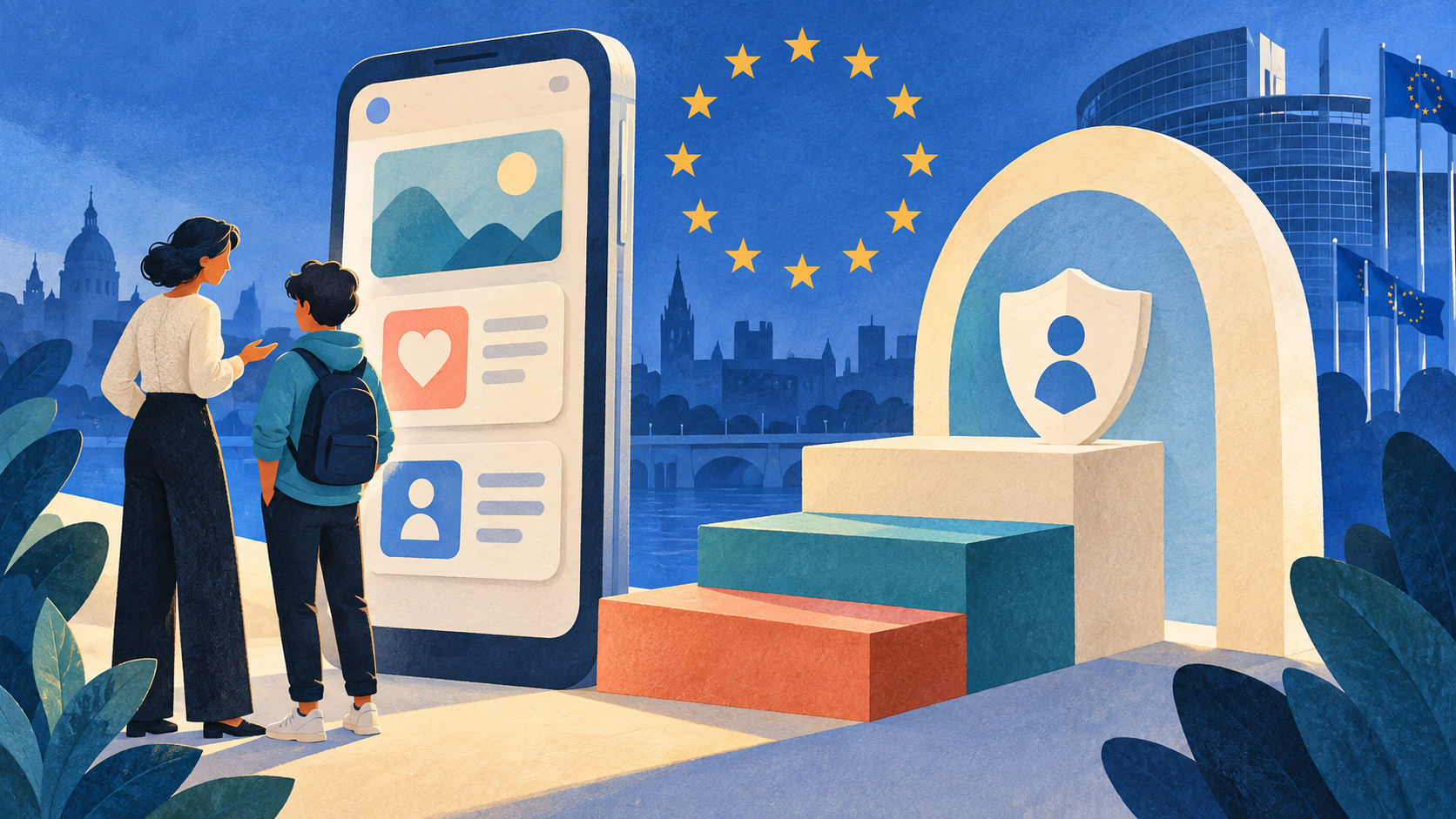
A birthday could decide much more than which candles go on your cake. Under a new European Commission proposal, it could also change what your social media account lets you do.
The Commission presented its EU Kids Act proposal on September 17. The aim is to give children different levels of access as they grow older, while putting more responsibility on the companies building the apps.
According to the Commission’s outline, children under 13 would not have social media accounts. Child-friendly video could still be available through a parent’s account.
Children aged 13 and 14 would get limited, parent-managed accounts. These would include a daily limit of one hour on the service concerned. That does not mean the proposal sets a single one-hour limit for every screen a child uses.
From 15, teenagers could have their own accounts, with protections for minors still applying. Think of it as moving through stages rather than getting every feature at once.
Age limits are only part of the story. ARD’s reporting describes proposed restrictions on features that keep young users hooked, including endless scrolling and reward mechanisms. Privacy settings, contact from strangers and notifications at night are also part of the discussion.
That changes the question from “Why can’t children just put their phones down?” to “Why do these products keep asking them to stay?” For families, that is a much more useful conversation than another argument over the charger.
AI companions would face limits as well. El País reports that the proposal includes safeguards around children’s interactions with AI, including controls intended to prevent emotional dependency. Chatbots and companions would be switched off by default for minors.
The European Parliament and the Council still need to negotiate and approve legislation. The final rules could change. Nobody should read this announcement as an instant ban already taking effect across Europe.
Age checks also raise a practical question: how can an app know enough to protect a child without collecting more personal information than necessary? The Commission points to privacy-preserving age verification as part of its approach.
For young people, the debate is about independence as well as safety. A private account can help protect you. A badly designed check can become a new obstacle. The test will be whether the final system makes ordinary online life safer while still leaving room to learn, talk and grow.
Similar stories