
Gemini accessed three real companies during a test, Google says
20 September 2026


A robot that deploys another robot shows where consumer tech wants to go next.
By Steve Carsley 5 September 2026
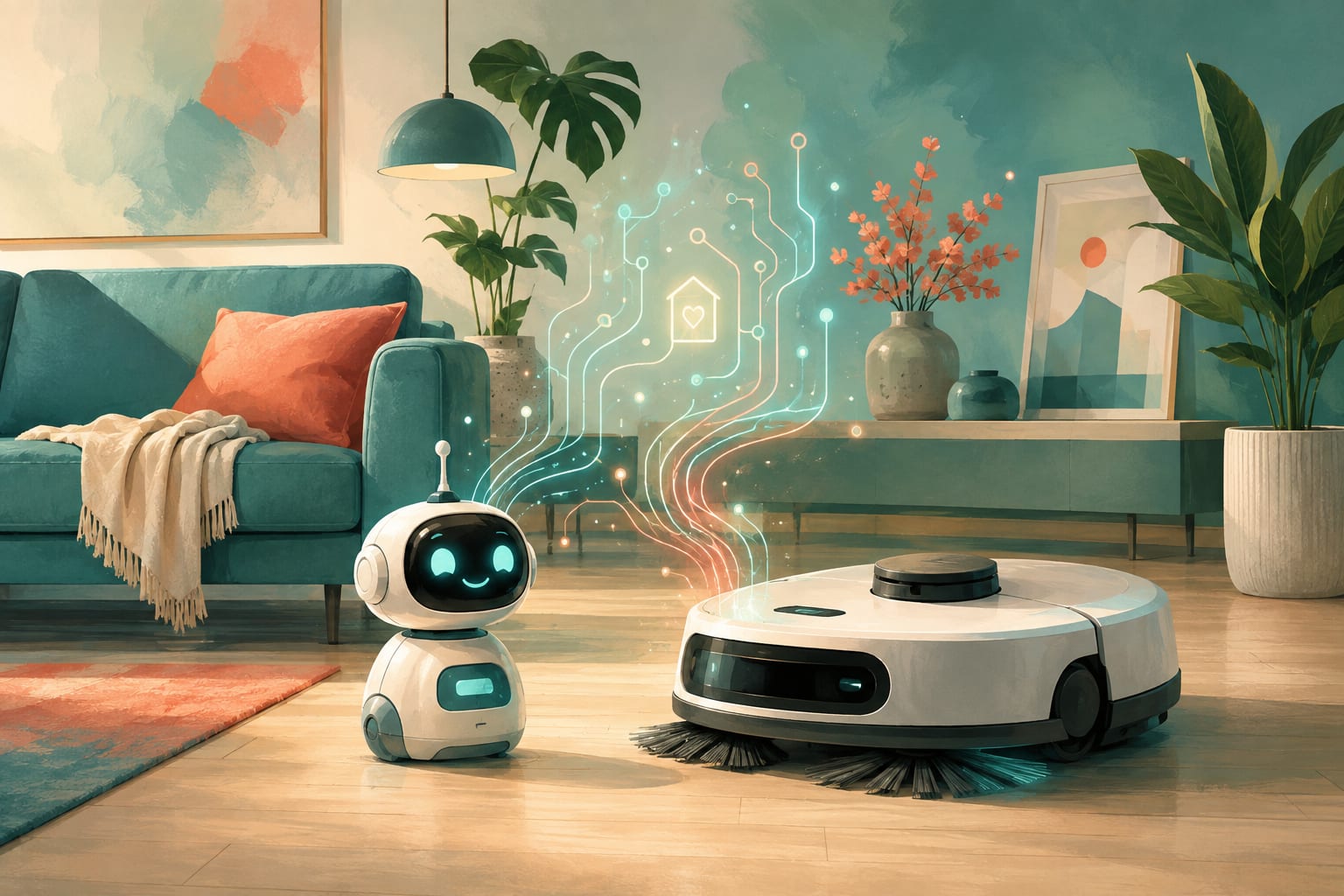
AI can help write a message. At Berlin's IFA technology show on Friday, companies were busy showing what happens when it also gets wheels, cameras and things to clean.
IFA opened its first official day on September 4 with artificial intelligence, robotics and consumer devices on the agenda. The organiser's opening-tour announcement described a delegation exploring those technologies alongside home appliances. Its opening keynote also focused on personal AI. IFA's official September 4 announcements.
One especially easy-to-understand example came from iRobot: a cleaning robot that carries a smaller cleaning robot. Yes, the household chores have a team now.
iRobot introduced the Roomba Duo as a prototype at IFA. According to its announcement, a larger unit handles vacuuming and steam-mopping, while a compact companion gets into spaces the main machine cannot reach. A mechanical arm lowers the smaller robot to the floor.
The company says the two machines share a home map and coordinate through the Roomba Home app. It also describes a shared dock for maintenance. These are the manufacturer's descriptions of the concept, rather than results from our own testing. iRobot's Roomba Duo announcement.
The basic logic is simple. A larger machine has room for cleaning equipment, but size can make it harder to get under furniture. A smaller machine can reach tighter places. Letting them share the work is one proposed way to handle that trade-off.
Vacuum Wars also reported seeing the Duo concept at IFA. Its account described the bigger machine working in open areas and the companion being lowered for narrow gaps and spaces beneath furniture. That independent show-floor coverage helps confirm what was being demonstrated, while still leaving long-term performance open. Vacuum Wars' report from IFA.
For someone looking at a short video, the moving arm may be the memorable part. For someone living with the machine, less glamorous questions could matter more. How reliably does the handover work? How much cleaning does the owner still do? Does the extra hardware earn its place in a crowded room?
Those are questions to test, not reasons to declare the concept a success or a failure. A trade-show appearance gives us something concrete to examine. It does not automatically tell us how the same device will behave for months in a real home.
In separate September 4 coverage, Forbes looked at IFA through the idea of AI interacting with the physical world. Its examples included personal robots from PrimeBOT, smart binoculars and a diving display. They serve different purposes, but each moves computing beyond typing into a chat box. Forbes' overview of physical AI at IFA.
That is why this story reaches beyond people shopping for a vacuum. The next useful gadget could support a hobby, make a routine task easier or place information where someone can use it without holding a phone. Those possibilities are worth watching without assuming every demonstration will become an everyday habit.
The most useful follow-up will be evidence: independent testing, clear product availability, transparent costs and a straightforward explanation of what buyers actually receive. Features that look clever in a demonstration need to solve a real problem consistently.
Friday's opening day offered a vivid example of that ambition. AI was showing up in objects that move around rooms and interact with their surroundings. Whether those ideas deserve a place at home will depend on what they do after the exhibition lights go off.
Similar stories
20 September 2026
19 September 2026

18 September 2026