Gemini accessed three real companies during a test, Google says
20 September 2026


An open model brings old lunar observations together to help scientists ask new questions.
By Steve Carsley 12 September 2026
The Moon has been photographed and measured for decades. The tricky part is turning all those separate observations into a picture that scientists can actually use. A new artificial intelligence model is meant to help with that very large homework assignment.
NASA and IBM announced the release of their Lunar Foundation Model on September 10. It was also featured in InformationWeek’s September 11 technology roundup, bringing a space-science project into the week’s wider AI conversation.
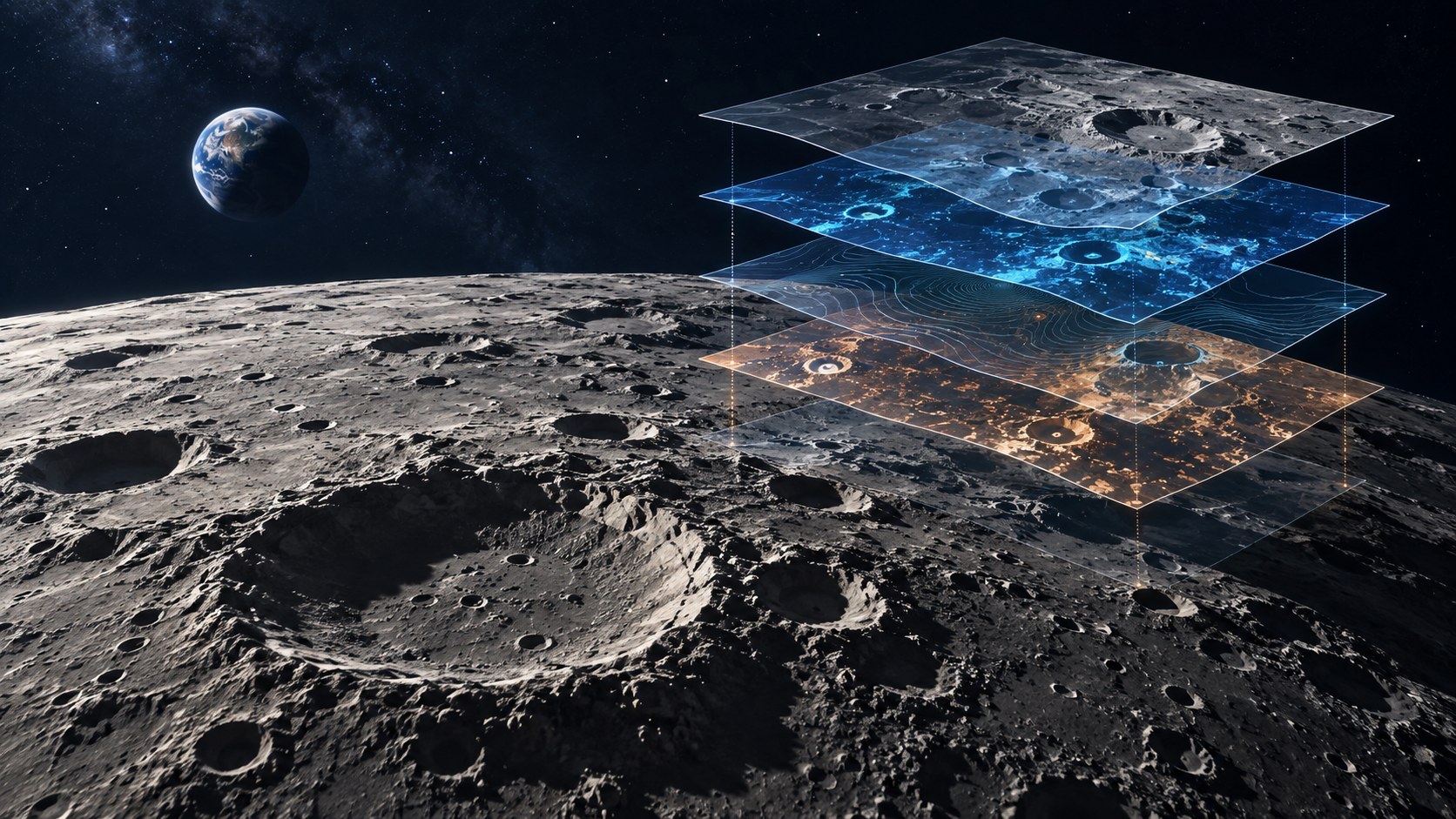
According to IBM’s announcement with NASA, the work brings together more than 30 aligned data layers from nine instruments across four missions. Researchers can use the model to investigate features such as craters, unusual volcanic terrain and places that might contain water ice.
Imagine trying to understand a city using separate maps for roads, hills and water pipes. Each map tells you something useful. Lining them up can reveal connections that are harder to spot when you keep switching between them. The lunar project applies that broad idea to scientific observations of the Moon.
A foundation model is a reusable starting point that can be adapted for different tasks. Here, the aim is to help researchers work with lunar information without building every analysis from scratch. The model is being released openly so other researchers can work with it and build on it.
This does not mean an AI has confirmed a fresh supply of ice or chosen a guaranteed safe landing spot. A prediction points scientists towards something worth investigating. Evidence must still support the conclusion.
Live Science’s reporting describes the model’s potential to improve lunar mapping. Better maps could help people understand the surface before future exploration, but a model’s output is not a substitute for careful scientific assessment.
That difference matters whenever a headline puts “AI” next to “discovery”. Software can find a pattern that deserves attention. Researchers then have to ask whether the pattern survives closer inspection, whether the underlying measurements are reliable and what other explanations might fit.
For students interested in space or coding, the appealing part is the combination of subjects. Understanding a crater is a geology problem. Handling a huge collection of observations is a computing problem. Working out whether a prediction is trustworthy is a scientific reasoning problem.
The exciting possibility is that older mission data can keep producing useful questions. A spacecraft may have finished collecting its measurements, while the work of understanding them continues. Sometimes the next step towards the Moon begins with a better way of reading information already on Earth.
Similar stories
20 September 2026

19 September 2026

18 September 2026