Thousands join hands at the Kennedy Center as its future becomes a political fight
20 September 2026


The parliamentary election is the first since the full-scale invasion of Ukraine, and the Kremlin wants a message of support.
By Steve Carsley 19 September 2026
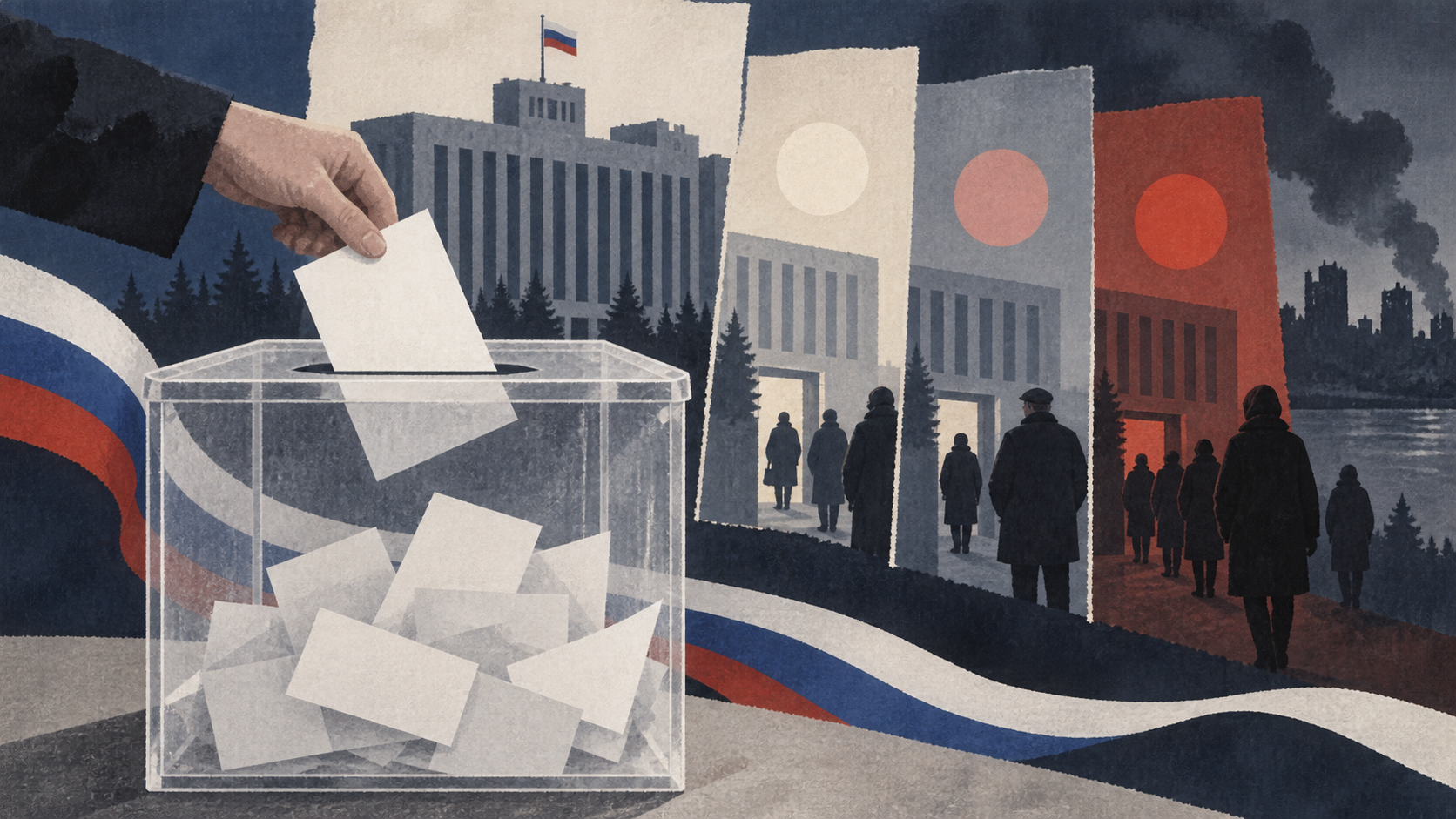
There are ballot boxes, candidates and three days to vote. The bigger question is how much choice voters actually have.
Russia began its parliamentary election on September 18, with voting scheduled to continue through September 20. It is choosing a new State Duma, the lower house of parliament, while the war in Ukraine continues.
This is not a presidential election. Vladimir Putin’s own position is not on the ballot. The contest concerns the lawmakers who sit in the Duma.
The chamber has 450 seats. Half are filled through votes for political parties, while the other half go to individual candidates in local constituencies, according to Associated Press reporting.
The three-day timetable was set in a June resolution by the Central Election Commission. The document, reproduced by legal database ConsultantPlus, explicitly names September 18, 19 and 20. That is the national voting window, rather than a claim that final results are already available.
Reuters reports that United Russia, the main pro-Putin party, is widely expected to retain its dominance. Most candidates opposing the war have been excluded from a tightly controlled political system.
AP also reports that the anti-war Yabloko party was removed from the party-list ballot, although a small number of its candidates remain in local races. Those restrictions are central to understanding the vote.
A ballot count can tell you which names received votes. By itself, it cannot tell you whether people had a meaningful range of alternatives. Who was allowed to stand matters before the counting even starts.
Reuters’ analysis says Putin has framed the election as a measure of support for the war. A strong official result could give him another argument for continuing it. That is an assessment of how the result may be used, not proof that every voter supports every government decision.
The same analysis points to another purpose: showing that familiar political routines can continue during a long conflict. Around 200 war veterans are standing for different parties, linking the campaign to Putin’s promise of public careers for people who fought.
For anyone following the election from outside Russia, the useful questions go beyond who comes first. How open was the contest? Which voices were missing? And what will the authorities claim the result means?
Voting has begun. The final figures will come later. The conditions under which those votes are being cast already tell an important part of the story.
Similar stories