
Renewable power had a record year. The 2030 target still needs a faster finish.
22 September 2026


A World Rhino Day update shows progress in protection, while conservationists warn that recovery remains fragile across Africa and Asia.
By Steve Carsley 23 September 2026
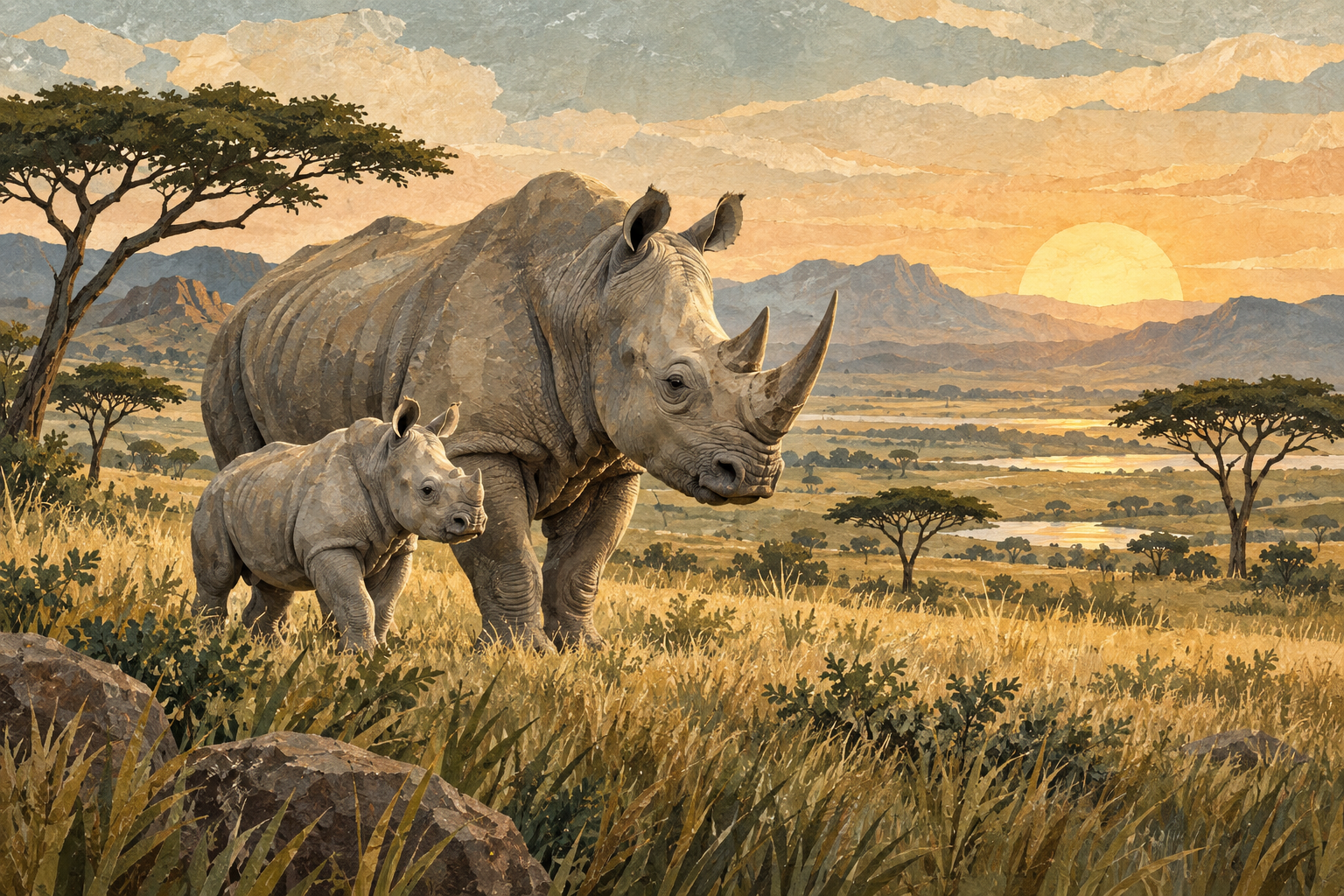
A falling number can be good news and still describe a serious loss. That is the difficult message behind South Africa’s latest rhino poaching figures.
In a World Rhino Day statement on September 22, the country’s environment department said 230 rhinos were killed by poachers between January and the end of August 2026. The figure was lower than the 248 recorded during the same period in 2025.
Kruger National Park recorded 114 losses, down from 123 in the corresponding eight months a year earlier. The department said the reduction coincided with stronger protection, dehorning programmes and law-enforcement work.
Those figures describe progress, not the end of poaching. Losing a breeding animal can also affect future population growth, while calves may be left without their mothers.
South Africa, home to the world’s largest rhino population, estimated its minimum national total at 15,096 at the end of 2025. The government said this represented a 4.9% increase from 2024.
The wider picture is mixed. The International Rhino Foundation’s 2026 assessment puts the global population at approximately 26,700, drawing on the available estimates for different species and years. It should not be read as a single worldwide count carried out on the same day.
The foundation reports gains for black rhinos and greater one-horned rhinos, alongside a recent decline in white rhinos and severe risks for the two species found in Indonesia. It also notes gaps in publicly available poaching data.
Discover Wildlife’s September 22 coverage highlighted the danger facing Javan and Sumatran rhinos and the need for continuing protection. Three of the world’s five rhino species are classified as critically endangered.
Counting survivors is only part of conservation. In its World Rhino Day roundup, Mongabay described efforts to move rhinos into suitable areas and rebuild populations.
Its reporting from Nepal showed why habitat quality matters: researchers tracking reintroduced rhinos found they travelled farther than expected, likely searching for water, grassland and places to wallow. Moving animals to a protected area does not automatically guarantee that all their needs are met.
That makes conservation a continuing job. Animals need protection from illegal killing, but they also need space and resources that can support them as their numbers grow. A better annual figure can be reversed if that work weakens.
World Rhino Day offers a reason to pay attention to both sides of the story. Some populations are recovering because people have kept working to protect them. Hundreds are still being killed, and the smallest populations remain vulnerable. The improvement is worth recognising precisely because there is still so much to protect.
Similar stories
22 September 2026

21 September 2026

20 September 2026