Thousands join hands at the Kennedy Center as its future becomes a political fight
20 September 2026


A narrow preliminary lead puts the centre-left in a stronger position as counting continues.
By Steve Carsley 15 September 2026
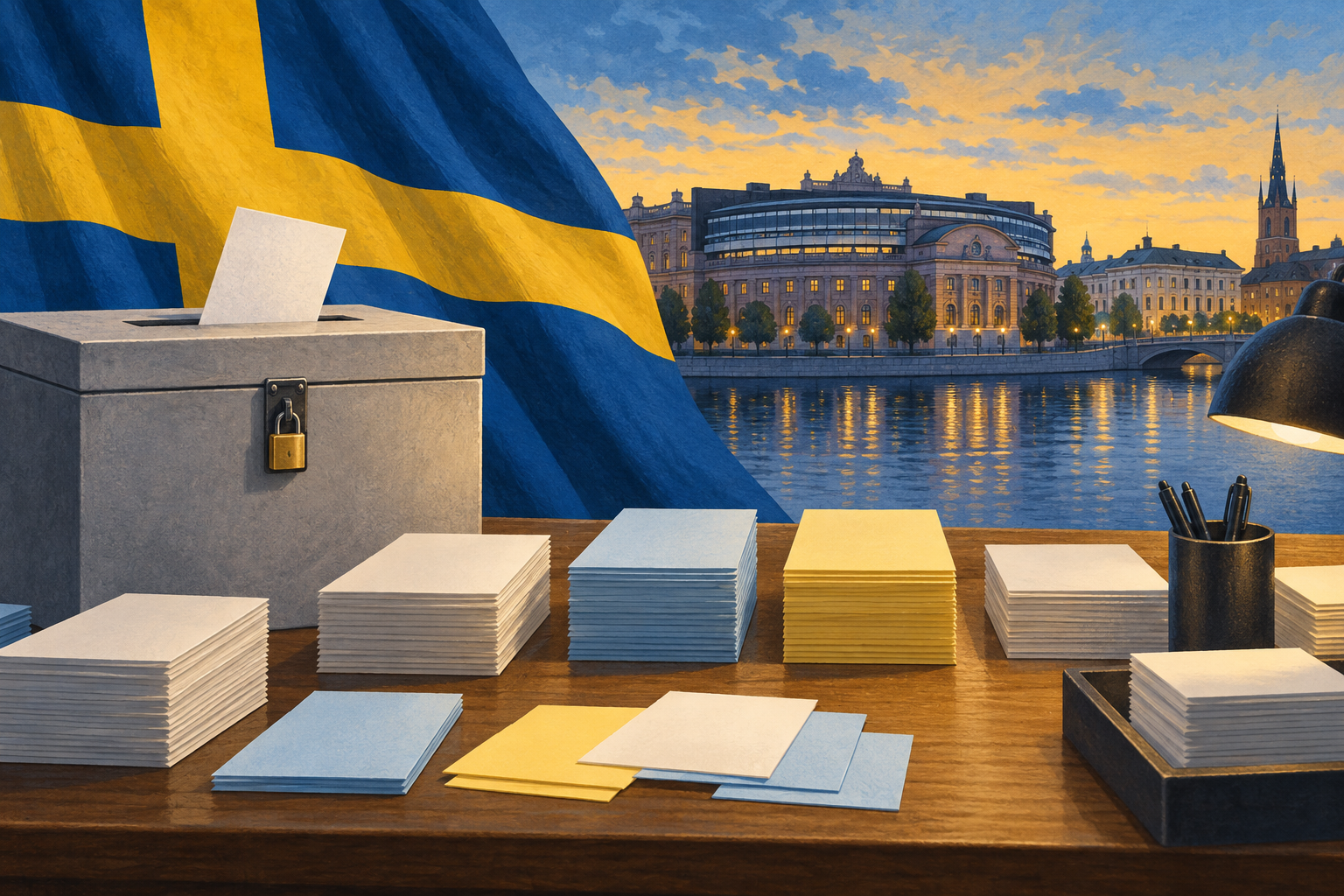
The votes have been cast. The political waiting game has only just begun. Sweden woke up on Monday to a result close enough that a small change in the count could still matter a great deal.
AP reported that preliminary figures gave the four opposition parties 176 seats in the 349-seat parliament, against 173 for the parties forming or supporting the outgoing government. Nearly 95% of districts had been counted at that stage.
That put the centre-left camp supporting Social Democratic leader Magdalena Andersson ahead of Prime Minister Ulf Kristersson’s bloc. It did not make a new government a finished deal.
The Swedish Election Authority says the final parliamentary result is expected during the weekend after election day. Until then, the figures remain subject to the counting process.
There is a reason for that extra time. In its explanation of the timetable, the authority says Wednesday’s count includes early votes that did not reach polling stations by election day, including late-arriving votes from abroad. The final count by county authorities began on Monday.
Those are ordinary parts of the process. A number moving after election night is not, by itself, evidence that something suspicious has happened. It can simply mean more valid ballots have reached the count.
Reuters reported that forming a government could prove difficult even if the lead holds. The Centre Party refuses to sit in government with the Left Party, while Andersson needs support from both.
That is the difference between agreeing that the current government should go and agreeing on what should replace it. The first can fit on a campaign poster. The second needs negotiations, compromises and enough support to make decisions.
Reuters also reported a setback for the anti-immigration Sweden Democrats. However, analysts cautioned that a centre-left government would not necessarily restore the much more open immigration policies of earlier years.
For younger voters, the eventual agreement matters because it shapes priorities such as public services, taxes and how the country treats newcomers. A party’s election promises are a starting point; the governing arrangement determines which ones have enough backing to move forward.
The useful thing to watch now is two separate developments: the completed vote count and the talks between parties. They answer different questions. One tells Sweden how its seats are divided. The other tells it who can actually govern.
Similar stories