
Russia begins three days of voting, with little room for opposition
19 September 2026


Artists and supporters rallied against Trump’s handling of the venue, with its name, closure and independence all in dispute.
By Steve Carsley 20 September 2026
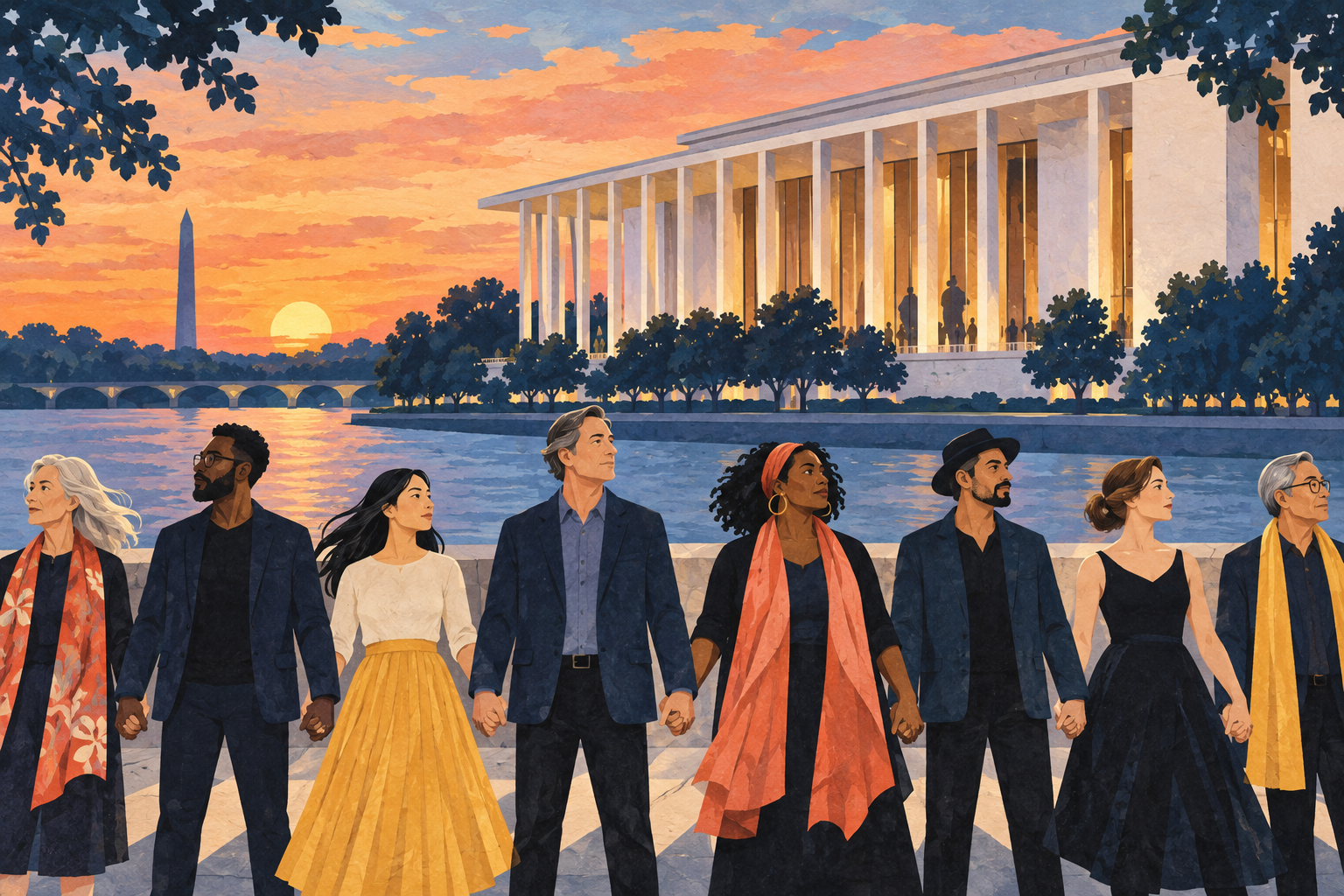
For one evening, the people outside a famous performance venue became the main event. Arts supporters gathered in Washington, joining hands to show that the Kennedy Center meant more to them than a name on a building.
The September 18 evening protest, early September 19 in India, brought thousands to the area. The Washington Blade reported that fencing prevented demonstrators from forming a complete ring around the building, according to organisers. The chain covered part of it instead.
The demonstration followed a week of arguments over the centre’s closure and President Donald Trump’s efforts to put his name on it. Supporters feared that the venue could be permanently lost or demolished. Those fears were central to the protest; they do not mean demolition had taken place.
Hands Off the Arts organised the gathering. Drag performer Tara Hoot hosted it, and the Gay Men’s Chorus of Washington performed. The crowd mixed political protest with the kinds of performances people wanted the institution to protect.
Actress Lynda Carter and elected officials were among those attending. In its account of the demonstration, DC Theater Arts reported the organisers’ demand that Trump leave the chairmanship and that the board be removed. These were the campaign’s demands, rather than decisions that had already been made.
Trump argues that he deserves recognition for trying to rescue the centre financially. Associated Press reporting described his claim that the venue would need continued fundraising and support to remain open. The board, aligned with him, had voted to close it for repairs.
That leaves two very different accounts of the same institution. Trump presents his involvement as a rescue. Demonstrators see his control and the threat to the building as reasons to intervene.
The organising group describes its wider mission as defending artists and cultural spaces from government control, censorship and partisan interference. That explains why a dispute about one venue drew people concerned about the arts more broadly.
For a young musician, actor or audience member, the practical question is easy to understand: who gets to decide what a public cultural space is for? A building can hold performances, jobs, memories and opportunities at the same time.
The human chain did not settle the centre’s future. It made visible how many people wanted a say in it. What happens to the venue, and whether its supporters can influence that decision, remains the story to watch.
Similar stories
19 September 2026

18 September 2026

17 September 2026