
Berlin’s Left Party wins big, with rent at the centre of the fight
22 September 2026


His September 22 speech combined a warning of further force with a forecast of negotiations, leaving the outcome uncertain.
By Steve Carsley 23 September 2026
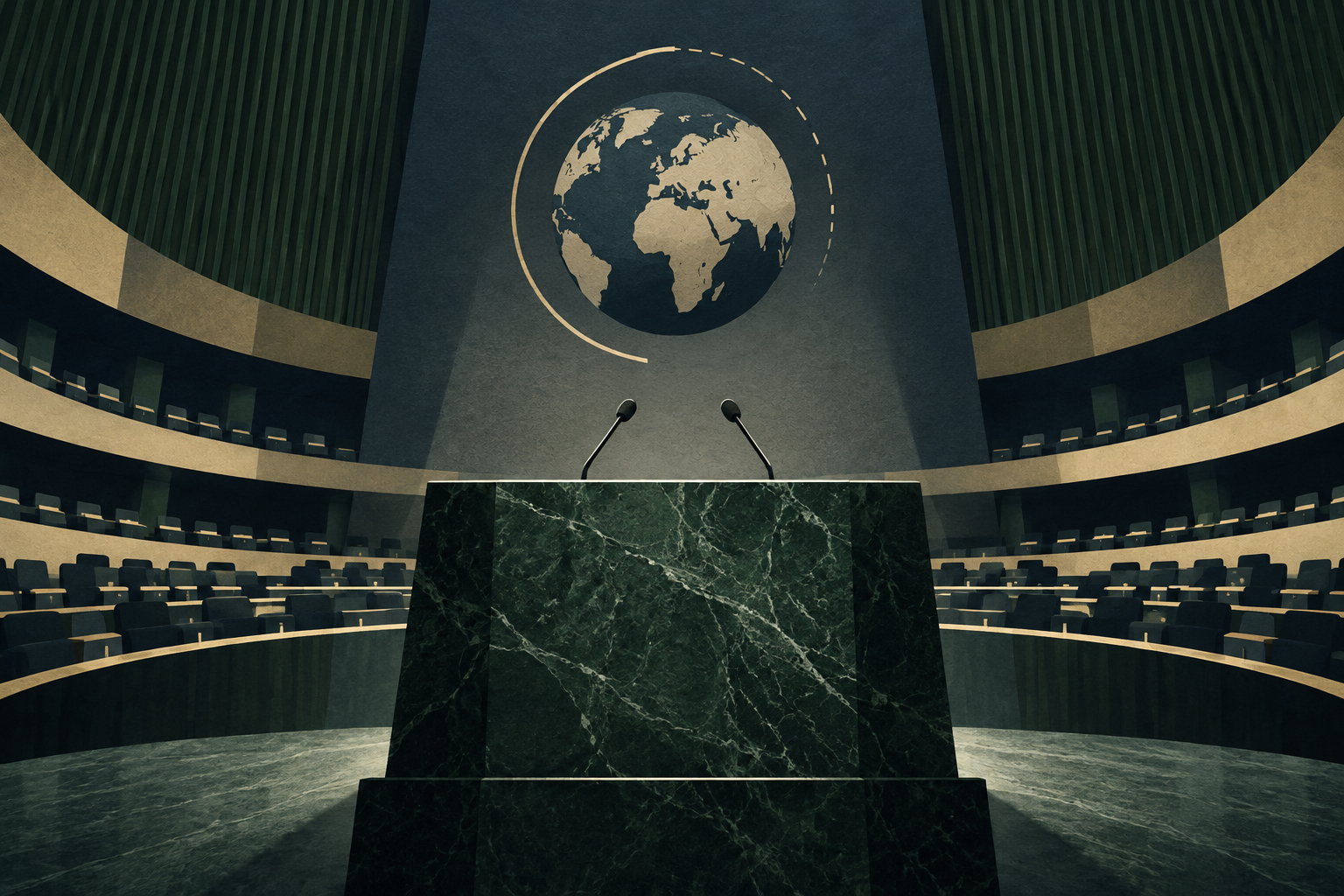
World leaders came to New York looking for answers about a war that has shaken the Middle East. Donald Trump offered a stark threat and a prediction of peace in the same speech.
Addressing the United Nations General Assembly on September 22, the US president said he was weighing whether to reach an agreement with Iran or use further force. He threatened to “annihilate the Islamic Republic” if a deal could not be reached.
At the same time, he predicted an agreement after the November 3 US midterm elections. That was his forecast, not an announcement that Iran had accepted a settlement.
The speech transcript published by Factba.se records Trump arguing that Iran was waiting to see how he performed in the elections. He then stressed that he was not personally on the ballot and said electoral considerations would not determine his approach to Iran.
Those remarks placed two different ideas side by side: an expectation that a deal might follow the vote, and an insistence that the vote would not guide his decisions. The speech did not provide a detailed public timetable for reaching an agreement.
Reuters reported that Trump also urged other countries to help isolate Iran economically. He defended the war by arguing that US action had prevented Tehran from obtaining a nuclear weapon. That was the president’s justification for the conflict, rather than an independent finding established by the speech.
The Associated Press reported that most of Iran’s delegation left the chamber during Trump’s criticism of the Islamic Republic. The agency described a conflict approaching seven months, with energy markets still unsettled and oil prices elevated.
Earlier that morning, Secretary of State Marco Rubio said Trump was open to meeting Iranian President Masoud Pezeshkian in New York, AP reported. An expression of willingness to meet is a diplomatic opening, but it does not establish that the two sides agree on the terms for ending the war.
For people watching far from the UN, the important distinction is between words at a lectern and decisions that change daily life. A threat can signal pressure. A prediction can signal hope. Neither, by itself, tells families when fighting will stop or when disrupted trade will recover.
The questions left by the address were concrete: what terms would both sides accept, how would any agreement be checked, and what would happen before that point? Trump’s speech made his pressure campaign unmistakable. It left the path to a settlement unresolved.
Similar stories
22 September 2026

21 September 2026

20 September 2026