Burnham wants to change how Britain votes. The change is still a promise.
30 September 2026


Macron and Sánchez want closer ties on energy, transport and technology. Spain’s parliament still has a say.
By Steve Carsley 3 October 2026
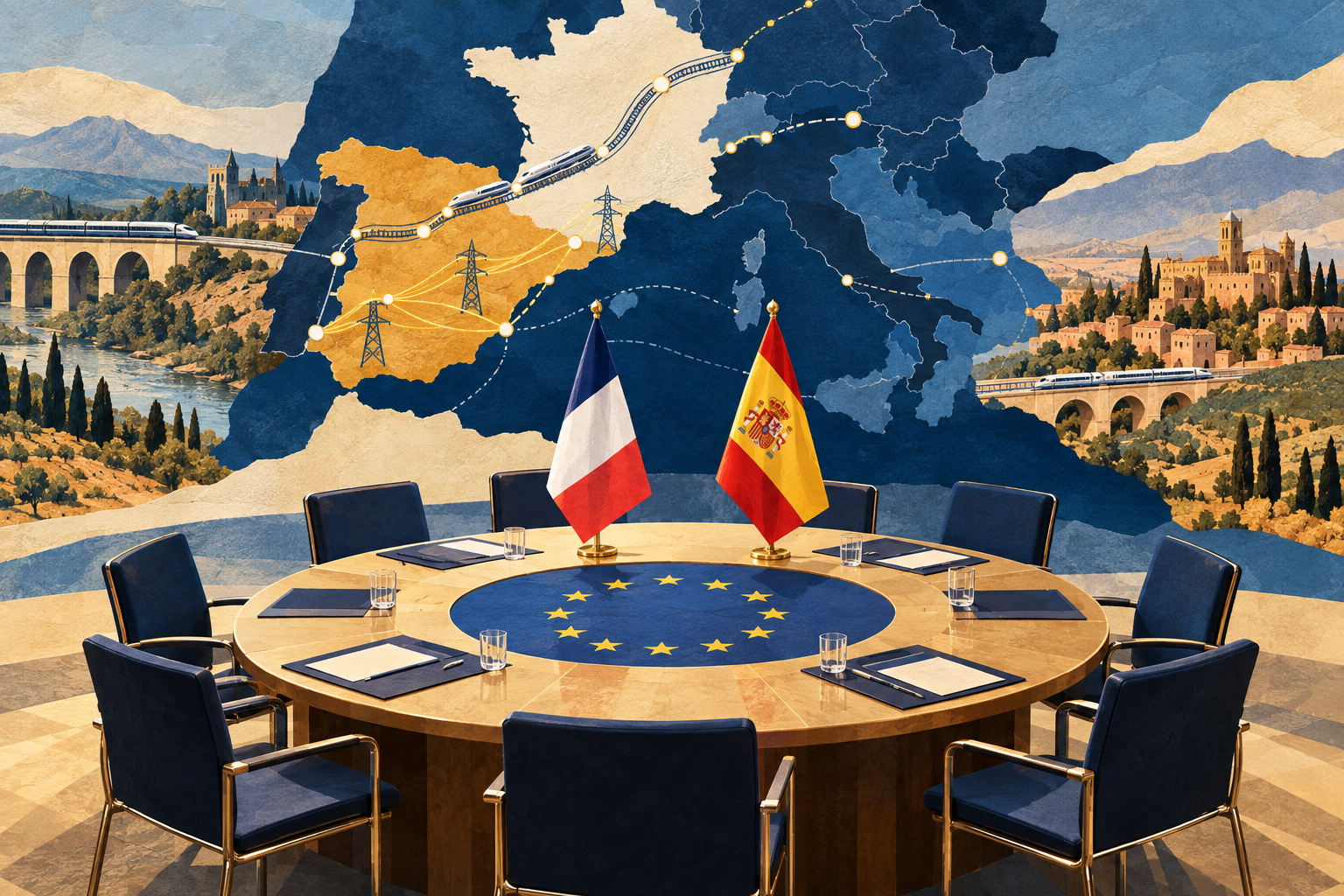
Two neighbouring countries can agree on the big picture and still struggle with the paperwork. That was the situation in Madrid on September 30, when French President Emmanuel Macron met Spanish Prime Minister Pedro Sánchez to discuss closer cooperation.
Their message was that Europe needs more unity and more ability to act for itself. But a friendship treaty meant to strengthen their own relationship had just run into trouble in Spain’s Senate.
According to the Spanish government’s account, the talks covered railway connections, energy links and cooperation in space. Both leaders backed a more connected European energy system.
There was a digital angle too. They discussed protecting children on social media and safeguarding elections. Space cooperation included opportunities for Spanish companies to launch rockets from French Guiana.
These subjects can sound distant until you think about what they involve: how countries move people, share power, communicate and set rules for the online spaces young people use every day. The announcements describe cooperation and ambitions. They do not mean every proposed project is already operating.
Euronews reported that Spain’s Senate rejected the friendship treaty the previous day. Sánchez apologised to Macron and said he wanted parliament to approve it before the current term ended.
The treaty was signed in Barcelona in January 2023. France had ratified it, and Spain’s lower house had backed it. Spain’s Constitutional Court also ruled that it was compatible with the constitution.
One disputed provision concerns ministers attending meetings in the other country. The governments supplied clarifications, but that did not remove the opposition’s objections. Parliamentary routes remained available to address the disagreement.
That distinction matters: a court saying an agreement fits the constitution does not automatically produce the political votes needed to move it forward.
In a separate part of the discussion, Macron and Sánchez welcomed the idea of Britain returning to the European Union, Reuters reported. Their comments followed remarks by Andy Burnham raising that possibility.
This was an expression of political support, not an announcement that Britain had rejoined or that a return had been agreed.
The meeting showed both the appeal and the difficulty of closer European cooperation. Leaders can set a direction in one afternoon. Turning that direction into approved agreements, funded projects and everyday changes takes more steps.
For readers following what comes next, the useful markers are parliamentary decisions and concrete project updates, rather than the warmth of a joint press conference.
Similar stories